Food Anthropology BioArt Exhibition
By making women’s labor visible, this project reframes food, craft, and care as essential forms of knowledge and history, the exhibition exceeds 8000+ views.
I created an online exhibition of food and women's overlooked innovations, “The hands That Feed The World” . It highlights embodied knowledge—gathering, fermenting, weaving, cooking—that sustains food security, cultural memory, and community identity, showing the significant relationship between food and women, further breaking the stereotypes of women in the kitchen.
Art work
Art is a medium for me to document, memorize, and speak for moments that matters
Art is how I de-accelerate and look closely. I began with Chinese calligraphy—discipline, breath, pressure—then moved into painting, mainly oil. I record first: on walks I make quick sketches and photos of what’s happening around me, then translate those notes into studio work about identity and the social environment.
I'm looking forward in exploring bioart and biodesign in the future, diving into design that not only serves human but treats nature as a collaborator, not a warehouse.
Portfolio:


Exploration of Documentary
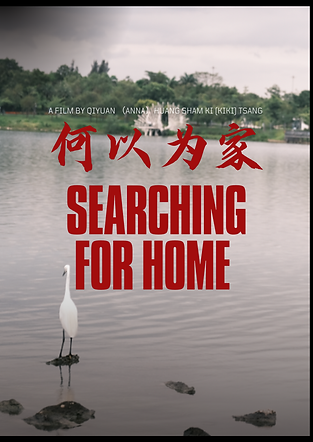

As China’s rapid economic development has reshaped its cities, a growing number of people have been pushed to the margins of society, gradually disconnected from the mainstream. Behind the rising skylines and uniform urban aesthetics, urban villanges (城中村) persist as transitional spaces. These villages expose the structural tension between modernization and displacement, where economic progress often prioritizes efficiency and visual order over social continuity.Within this context emerge the so-called “Sanhe Gods” (三和大神), a loosely defined group of migrant workers who travel from rural or semi-urban regions to megacities such as Shenzhen in search of opportunity. Many of these migrant workers ultimately fall into a state of extreme precarity: lacking permanent housing, surviving on minimal food intake, and relying on energy drinks to sustain themselves, and often ended up from Sanhe youths(青年) to gods (大神)(metaphor for not eating being like a god) .
Through this trajectory, we examine how external structural forces, such as labor commodification, urban planning policies, and economic stratification, shape individual lives. Rather than framing marginalization as personal failure, the film situates it within broader systems of development, questioning who truly benefits from rapid modernization and who is rendered invisible in the process.